
Government workers, business leaders, and concerned citizens are watching for clear signs that this government shutdown is finally coming to an end after 43 days of uncertainty. While political negotiations continue behind closed doors, specific indicators show the federal government is preparing to resume normal operations.
This analysis breaks down the key signals that suggest government shutdown ending is imminent. We’ll examine legislative actions that signal breakthrough progress and how federal agencies are preparing workers for their return to full operations. You’ll also learn about the timeline for essential services resuming and what to expect as air travel restrictions begin lifting nationwide.
Legislative Actions Signal the End
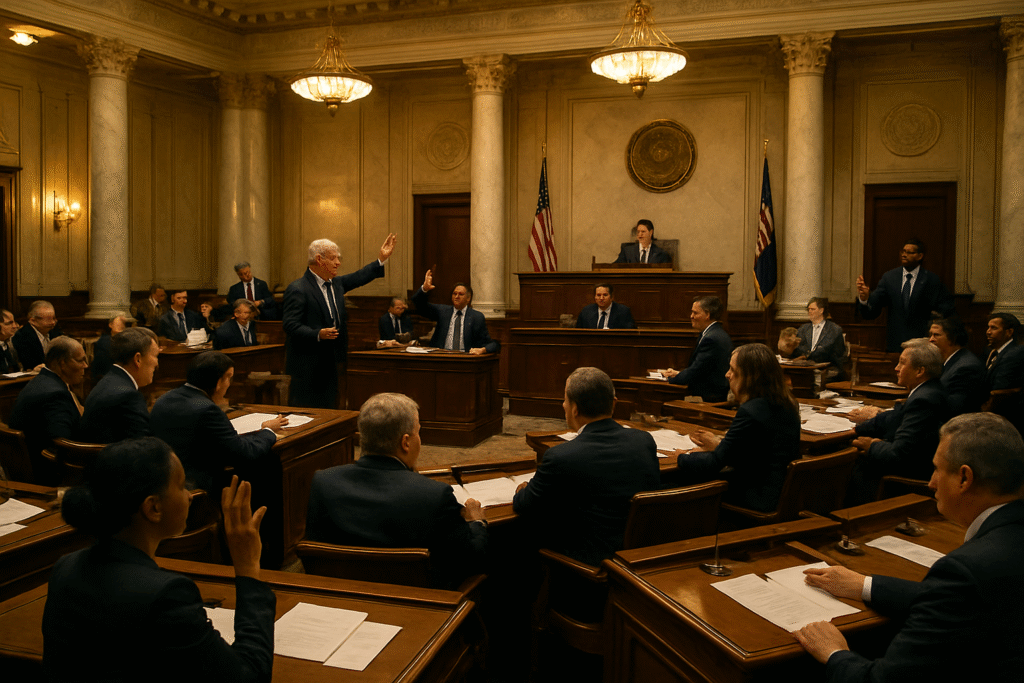
House passes spending package with bipartisan support
The House of Representatives achieved a critical breakthrough in ending the government shutdown when it passed the comprehensive spending package by a narrow margin of 222 to 209 votes on Day 43 of the historic federal funding lapse. This marked the first time the House had held a vote in nearly two months following an extended recess during the shutdown period.
The House of Representatives achieved a critical breakthrough in ending the government shutdown when it passed the comprehensive spending package by a narrow margin of 222 to 209 votes on Day 43 of the historic federal funding lapse. This marked the first time the House had held a vote in nearly two months following an extended recess during the shutdown period.
The Republican-controlled chamber successfully advanced the legislation despite facing vehement opposition from House Democrats, who remained largely unified against the measure. However, six Democratic representatives broke ranks with their party leadership to support the government funding deal: Adam Gray of California, Marie Gluesenkamp Perez of Washington, Jared Golden of Maine, Henry Cuellar of Texas, Tom Suozzi of New York, and Don Davis of North Carolina. Notably, all of these Democrats represent swing districts where constituents were particularly affected by the prolonged shutdown.
In a rare display of Republican dissent, only two GOP members voted against their own party’s bill: Representatives Thomas Massie of Kentucky and Greg Steube of Florida. Steube opposed the legislation specifically due to a controversial provision that the Senate quietly added at the last minute, which created a legal avenue for eight Republican senators to sue the U.S. government for up to half a million dollars each related to privacy violations from the January 6th investigation.
The procedural advancement came after the House voted 213 to 209 on a key procedural motion, setting the stage for one hour of debate before the final passage vote.
Senate Democrats break party blockade to advance the bill
Now that we have covered the House action, the path to this legislative breakthrough actually began in the Senate, where a critical group of eight Democratic senators made the pivotal decision to break their own party’s blockade. These senators joined Republicans in allowing the spending measure to move forward, marking a significant departure from the unified Democratic opposition that had characterized the early stages of the shutdown.
This strategic shift by Senate Democrats prompted immediate backlash within their own ranks, with many House Democrats expressing frustration and anger over what they viewed as capitulation. The Democratic defections in the Senate were driven by mounting concerns about the severe impacts on federal workers, millions of Americans at risk of losing food assistance through SNAP, and widespread air travel disruptions affecting constituents nationwide.
Representative Alexandria Ocasio-Cortez articulated the frustration felt by many Democrats, stating: “We have federal workers across the country that have been missing paychecks. We have SNAP recipients, millions of SNAP recipients across the country whose access to food stability was imperiled, and we have to figure out what that was for.” She criticized what she called the Trump administration’s “cruelty” during the shutdown and warned against enabling such tactics through legislative compromises.
The Senate’s decision to advance the bill came after senators concluded that with hundreds of thousands of federal workers furloughed and critical services disrupted, it was time to find an exit strategy from the prolonged standoff, even without securing their primary demand for extended healthcare subsidies.
President Trump schedules official signing ceremony
With this legislative momentum building, President Trump moved quickly to formalize the end of the longest government shutdown in U.S. history by scheduling an official signing ceremony for 9:45 p.m. on Wednesday evening in the Oval Office. The White House announced the signing ceremony even before the House had completed its final vote, demonstrating the administration’s confidence in the bill’s passage.
During the signing ceremony, President Trump was surrounded by Republican House leadership and business executives as he put his signature on the legislation. “With my signature, the federal government will now resume normal operations,” Trump declared as he signed the bill into law. The President used the ceremonial moment to launch sharp criticism against Democrats, whom he blamed for what he characterized as “extortion” and the resulting harm to air travel and federal workers’ paychecks.
Trump’s remarks during the signing were notably partisan, despite polling showing that most Americans blamed Republicans for the shutdown. “People were hurt so badly,” Trump said, adding, “I just want to tell the American people, you should not forget this. When we come up to midterms and other things, don’t forget what they’ve done to our country.” This rhetoric clearly positioned the shutdown resolution as political ammunition for future campaigns.
The formal signing ceremony represented the final constitutional step needed to restart federal government operations and begin the process of restoring services that had been disrupted for over six weeks. Trump initially suggested he would take questions at the ceremony’s conclusion, but his aides quickly ushered reporters out of the Oval Office, effectively ending the historic moment that brought the 43-day shutdown to its official close.
Federal Workers Prepare for Return

Agencies direct employees to report for work Thursday morning
Multiple federal agencies across the government have issued direct orders for their employees to return to work Thursday morning, marking a decisive shift as the government shutdown comes to an end. The Health and Human Services, Justice, Interior, and Housing and Urban Development departments all sent communications to their workforce advising them to report for duty, regardless of when the funding legislation was officially signed.
The State Department followed suit, with Undersecretary for Management Jason S. Evans writing to employees: “Now that a CR has been enacted, we can all continue the critical work of advancing our national interests on behalf of the American people. We look forward to all our people returning to work expeditiously on your next scheduled workday.”
Russ Vought, director of the Office of Management and Budget, issued a comprehensive memo to agency heads directing them to ensure furloughed employees return to work Thursday. His guidance emphasized that “agencies should take all necessary steps to ensure that offices reopen in a prompt and orderly manner” on Thursday, establishing a clear timeline for the federal government reopening.
Back pay processing begins within 24-48 hours for essential workers
Federal workers returning to their posts will see immediate action on their overdue compensation, with back pay processing set to begin within 24-48 hours for essential workers who continued working without pay during the 43-day shutdown. The legislation passed by Congress guarantees back pay for all affected federal employees, providing crucial financial relief after six weeks without paychecks.
Transportation Secretary Sean Duffy announced that air traffic controllers, who were among the essential workers required to work throughout the shutdown, will receive a lump sum payment equal to 70% of their back pay within 48 hours of the shutdown ending. This expedited payment acknowledges the critical role these workers played in maintaining aviation safety during the crisis.
The timing varies significantly by agency based on their individual payroll providers and processing capabilities. Federal employment attorney Shaun Southworth noted that while many employees historically receive deposits within the first business days after reopening, some may need to wait until the next payroll cycle if additional system processing is required.
Specific agencies have established their own timelines for back pay distribution:
- General Services Administration, Office of Personnel Management, and departments of Energy, Health and Human Services, and Veterans Affairs are projected to issue checks as soon as this weekend
- Education, State, Interior, Transportation departments, along with EPA, NASA, and Social Security Administration, are expected to process payments by Monday
- Agriculture, Commerce, Homeland Security, Housing and Urban Development, Labor, Treasury, and Justice departments may require until the middle of next week
Password resets and IT systems require immediate attention
Now that federal workers are preparing to return to their workstations, IT infrastructure and security protocols demand immediate attention after the extended shutdown period. The State Department’s communication to employees included specific links to frequently asked questions about returning to work, indicating the comprehensive preparation required for a smooth transition back to normal operations.
With thousands of federal employees having been away from their systems for over six weeks, password resets and system access verification will be critical first steps in the return process. The extended absence means that many automated security protocols may have expired, requiring systematic restoration of access credentials across multiple government networks and platforms.
The coordination required extends beyond simple login procedures, as agencies must ensure that all security clearances remain valid, system updates have been properly implemented during the downtime, and that any temporary workarounds established during the shutdown are properly transitioned back to standard operating procedures. This technical preparation is essential for maintaining the security and efficiency of federal operations as government services resume.
Essential Services Resume Operations

SNAP benefits restore within hours of reopening
The restoration of Supplemental Nutrition Assistance Program (SNAP) benefits represents one of the most immediate signs that federal services are resuming operations. Agriculture Secretary Brooke Rollins confirmed that her department began working immediately once the government reopened to issue full SNAP benefits for November, with recipients expected to receive their payments “hopefully by the end of this week, most will receive it — at the very latest on Monday.”
Nearly 42 million Americans were left in limbo during the shutdown when the Department of Agriculture initially stated it could not distribute food stamps for November. This decision sparked multiple lawsuits, which resulted in federal courts requiring the agency to issue partial payments and then later, full allotments. At least 19 states rushed to issue full benefits during the shutdown, while several other states managed to provide partial benefits.
The timing for when Americans enrolled in SNAP will receive their full benefits depends on their state of residence. Many states can issue full SNAP benefits within one to three days of receiving guidance from the USDA, though some may require up to a week. States that previously issued partial benefits will need additional time to calculate how much more recipients are owed, typically completing this process within a week.
Head Start programs need up to two weeks to fully restart
Unlike the rapid restoration of SNAP benefits, Head Start programs require significantly more time to resume full operations. While specific details about Head Start program restoration timelines weren’t extensively detailed in the immediate aftermath, the complex nature of educational and childcare services means these programs need comprehensive preparation before welcoming children and families back.
The extended reopening timeline for Head Start programs reflects the intricate coordination required between federal oversight, local grantees, and community partners. These programs serve vulnerable populations and must ensure proper staffing levels, facility safety checks, and educational material preparation before resuming services. The two-week timeline allows for thorough safety protocols, staff recall procedures, and the restoration of comprehensive services that families depend on.
This gradual restart approach ensures that when Head Start programs do reopen, they can provide the full range of educational, nutritional, and family support services that characterize these critical early childhood programs.
Transportation services gradually return to normal capacity
Transportation services face perhaps the most complex recovery timeline among essential services resuming operations. Air travel continues experiencing significant disruptions, with nearly 1,000 flights canceled and nearly 400 more already scheduled for cancellation the day after reopening, according to FlightAware data.
Delta CEO Ed Bastian expressed optimism about the recovery timeline, stating “I think the system should return to normal by the weekend. I really do.” However, the Federal Aviation Administration continues requiring airlines to cancel 6% of their US flights to reduce operations due to air traffic control staffing shortages. Before the shutdown ended, staffing levels “improved dramatically” when it became clear that a funding deal was imminent.
The flight disruptions stem from a combination of air traffic controller staffing issues and FAA-mandated flight reductions implemented during the shutdown. Major airlines report varying cancellation numbers: United canceled 222 flights, Southwest around 170 cancellations, and American continuing its pattern of approximately 200 daily flight cancellations established during the shutdown.
The recovery challenge is compounded by the fact that some air traffic controllers will never return to their positions, choosing retirement or seeking employment in sectors not subject to government shutdowns. Industry experts suggest it may take months, or possibly years, for the aviation industry to fully recover from the 43-day shutdown’s impact on staffing and operations.
Air Travel Restrictions Begin to Ease

Flight restrictions maintained at 6 percent instead of expanding
The Federal Aviation Administration has made a crucial decision to cap flight restrictions at 6 percent rather than implementing the originally planned escalations that would have reached 10 percent. This significant development represents a clear indicator that the government shutdown resolution is taking hold across the aviation system. Initially, the FAA had scheduled flight cuts at 40 of the country’s busiest airports to increase to 8 percent on Thursday and 10 percent on Friday, but the agency announced that reductions would remain at the current 6 percent level.
This decision came directly in response to dramatically declining air traffic control absences as federal workers prepared to return to their positions with pay restored. The maintained restriction level, while still impacting operations, signals that the aviation system is stabilizing and moving toward full recovery rather than further deterioration.
Air traffic controller attendance shows improvement
Now that we’ve examined the restriction levels, the underlying factor driving this positive change becomes clear through improved air traffic controller attendance patterns. During the height of the shutdown crisis, some 13,000 air traffic controllers were forced to work without pay for more than a month, creating an unsustainable situation that led to widespread absences due to financial stress and burnout.
The improvement in attendance rates has been dramatic and measurable. Air traffic control absences accounted for just 1 percent of delays on Tuesday, compared with 5 percent on average before the shutdown began. This represents a significant turnaround from the peak crisis period when controllers were calling out due to stress and financial pressure.
Federal authorities had reported concerning upticks in air traffic controller absences throughout the shutdown period, with many experienced professionals unable to continue working without compensation. The pre-shutdown workforce was already stretched thin, with controllers consistently working six days a week, up to 10 hours a day on mandatory overtime, with strictly limited vacation time. The financial pressure from the shutdown pushed this already strained system to its breaking point.
Full recovery expected within one week of reopening
With this improved attendance in mind, aviation industry experts and airline executives are now providing concrete timelines for complete system recovery. Delta Air Lines CEO Ed Bastian told CNBC that he expects the aviation system to be largely back to normal by the weekend following the shutdown’s end, stating, “By the weekend, I think things should be in good shape.”
The recovery timeline reflects the complex nature of airline operations, where flight cancellations create cascading effects throughout the entire system. As aviation expert Ahmed Abdelghany from Embry-Riddle Aeronautical University explained, the pace of recovery “is likely to vary across airports and carriers, often unfolding on a case-by-case basis over several days following the formal resolution.” Airlines must carefully assess the flow of aircraft and crew when restoring canceled flights, making the recovery process more intricate than simply flipping a switch.
Flight disruptions have already begun showing marked improvement, with cancellations decreasing from 2,954 on Sunday to 900 on Wednesday, demonstrating the rapid progress being made. Transportation Secretary Sean Duffy emphasized that if safety teams determine trend lines are moving in the right direction, the FAA will put forward a clear path to resume normal operations, providing the framework for this one-week recovery timeline that industry leaders are confidently projecting.
Economic and Public Services Recovery Timeline
Statistical agencies prepare delayed economic data releases
Economic data released by the government, which business leaders and the Federal Reserve rely on to assess the state of the US economy, has been suspended throughout the 43-day shutdown. The Bureau of Labor Statistics and Bureau of Economic Analysis are now working to establish updated schedules for critical economic indicators that have been delayed for over six weeks.
Monthly employment reports for September and October haven’t been released, representing an unprecedented gap in labor market data. The first estimate of third-quarter gross domestic product, which captures all goods and services produced in the economy, also remains pending. This marks the first time there have been two delayed jobs reports in government shutdown history.
Once statistical agencies prepare their delayed economic data releases, the impact of missing information becomes clear. October’s employment report will likely never be released, as data for that month was not collected during the shutdown, according to White House Press Secretary Karoline Leavitt. This permanent data gap leaves policymakers at the Federal Reserve “flying blind at a critical period,” creating challenges for monetary policy decisions.
Smithsonian museums and National Zoo announce staggered reopening
With federal operations restarting, cultural institutions are preparing to welcome visitors back after the extended closure. The Smithsonian museums and National Zoo, which serve millions of visitors annually, face the complex task of restoring full operations after more than six weeks of closure.
Federal workers returning to these institutions must address significant backlogs while ensuring facilities are safe for public access. The staggered reopening approach allows museums to systematically restore operations, conduct necessary maintenance, and bring staff back to full capacity. This methodical process ensures that when doors reopen to the public, visitors receive the full experience these national treasures are known for providing.
National parks restore full services and operations
The National Park Service faces a comprehensive assessment of any damage that occurred during the 43-day shutdown across America’s national parks. While many parks maintained law enforcement staffing during the closure, reports have emerged of graffiti and off-road vehicle damage in parks like Arches and Glen Canyon, as well as illegal activities including base-jumping and drone flying in Yosemite.
Park officials must evaluate the extent of shutdown-related impacts before fully restoring services. Fortunately, volunteer support surged during the shutdown, and many parks were able to pay for essential custodial services like garbage removal using fee money, while volunteer groups stepped in to provide additional assistance.
The recovery process involves more than just damage assessment. Rangers and park staff must restore full interpretive programs, visitor centers, and recreational facilities that were closed or operating with limited capacity. “Thankfully, many parks didn’t get damaged,” said Kristen Brengel, senior vice president of government affairs at the National Parks Conservation Association. However, she noted that such extended closures are “unsustainable and everyone knows it.”
The restoration timeline varies by park, depending on staffing levels, volunteer support received during the shutdown, and any specific damage or maintenance issues that arose. Parks that maintained some operations through fee-based funding and volunteer efforts may restore services more quickly than those that were completely shuttered.
Conclusion
After 43 days, the longest government shutdown in U.S. history has officially ended with President Trump’s signature on the spending package. The five clear indicators—from legislative breakthrough to federal workers preparing for return, essential services resuming operations, easing air travel restrictions, and the established recovery timeline—all pointed to this inevitable conclusion. While the House voted 222 to 209 to pass the bill, the bipartisan support from six Democrats who broke ranks demonstrated that practical governance ultimately prevailed over political posturing.
The road to full recovery will take time, with federal workers expecting back pay within 24-48 hours, SNAP benefits restoring within hours, and air travel gradually returning to normal over the coming week. As agencies reopen and essential services come back online, the focus now shifts to preventing future shutdowns and addressing the underlying issues that led to this prolonged standoff. The American people, who bore the brunt of this crisis, deserve assurance that their government can function without holding critical services hostage to political disagreements.
As the government reopens and agencies clear backlogs, many businesses are seeking extra support to manage renewed demand. Services like eAsloob offer affordable virtual assistants to help with admin, accounting, data entry, and digital marketing during the post-shutdown transition. Learn more at www.easloob.com… Read more… What Top CEOs Won’t Tell You About Virtual Assistants